


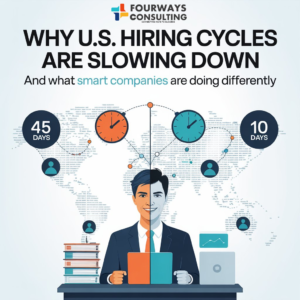
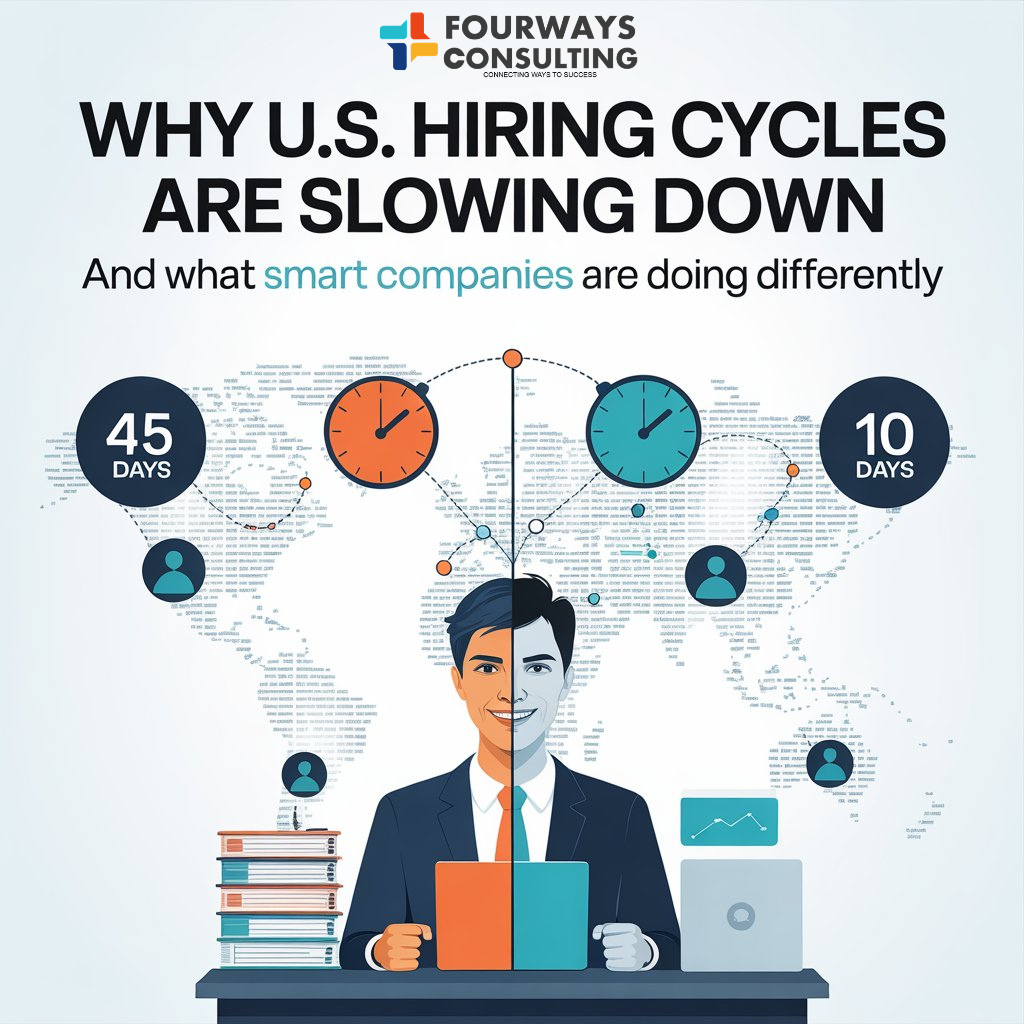
The hiring landscape in the United States is undergoing a structural shift, and it is not a temporary blip. What once took two to three weeks now routinely stretches into 45 to 60 days. In high-demand sectors like cybersecurity, cloud infrastructure, data engineering, and healthcare staffing, delays have become the norm rather than the exception.
The more pressing question is not whether this is happening. It is why — and whether the real culprit is a talent shortage, or the hiring model itself.
The Hidden Bottlenecks Slowing Hiring Teams Down
Most organizations are still operating on outdated hiring frameworks designed for a different era. The symptoms are familiar: multiple interview rounds with vague evaluation criteria, over-reliance on overstretched internal HR teams, decision-making cycles that drag on without clear ownership, and no access to pre-qualified talent pools that can move quickly.
The result is predictable. Top candidates — especially in competitive technical roles — are typically fielding multiple offers simultaneously. They do not wait 45 days. Organizations that move slowly lose them, often within the first week.
The Shift Toward Distributed and Global Talent Models
Forward-thinking companies are no longer waiting for talent to come to them. They are actively redesigning how they access it.
Rather than limiting their search to local or domestic talent pools, leading organizations are embracing distributed workforce strategies: leveraging offshore and nearshore talent, partnering with specialized staffing firms that maintain deep pipelines, and using pre-vetted candidate networks that drastically compress time-to-hire. In many cases, this has reduced hiring cycles from 45 days to fewer than 10.
This is not simply a cost-cutting measure. It is a strategic realignment — one that recognizes that the best person for a role may be in Bengaluru, Nairobi, Warsaw, or São Paulo, not necessarily in the same zip code as the office.
The Strategic Advantages of Hiring Smarter
Companies that adopt global staffing models gain more than speed. The competitive advantages compound over time. Faster hiring timelines mean critical roles are filled before they become a drag on productivity. Reduced cost per hire frees up budget for onboarding, development, and retention. Access to niche, hard-to-find skill sets — particularly in emerging tech disciplines — becomes a genuine differentiator. Greater scalability during demand spikes means organizations can grow without the friction of restarting a lengthy hiring process each time.
The Fourways Consulting Perspective
At Fourways Consulting, we have seen this pattern play out consistently across our clients. The companies winning in 2026 are not the ones hiring more aggressively. They are the ones hiring more intelligently.
By combining global talent networks with structured, criteria-driven evaluation processes, organizations can shift from reactive hiring — scrambling to fill urgent gaps — to strategic workforce planning, where talent acquisition becomes a proactive, continuous function of the business.
The Future of Hiring Is Agile, Global and Data-Driven
The companies that recognize this early and build their talent infrastructure accordingly will not only close roles faster. They will build more resilient, more capable teams positioned to compete in any market condition.
At Fourways Consulting, we help organizations make that transition. Reach out to learn how our global staffing solutions can reshape your hiring strategy.
Deloitte Plans 50,000 Hires in India: What It Means for AI, Jobs & Your Business | Fourways Consulting Services
Deloitte Plans 50,000 Hires in India: What It Means for AI, Jobs & Your Business Deloitte's massive India expansion...
Why U.S. Hiring Cycles Are Slowing Down And What Smart Companies Are Doing Differently
The hiring landscape in the United States is undergoing a structural shift, and it is not a temporary blip....